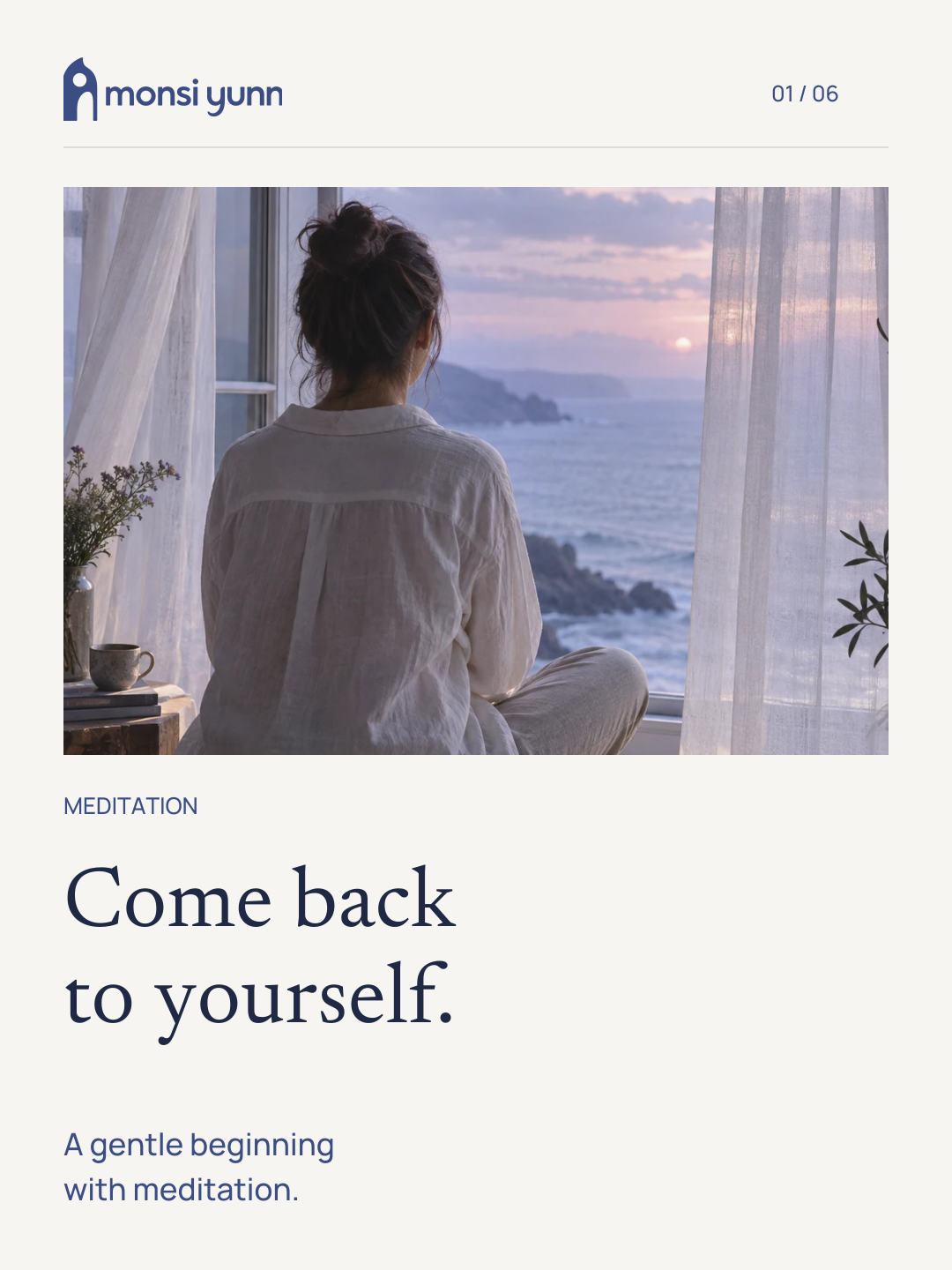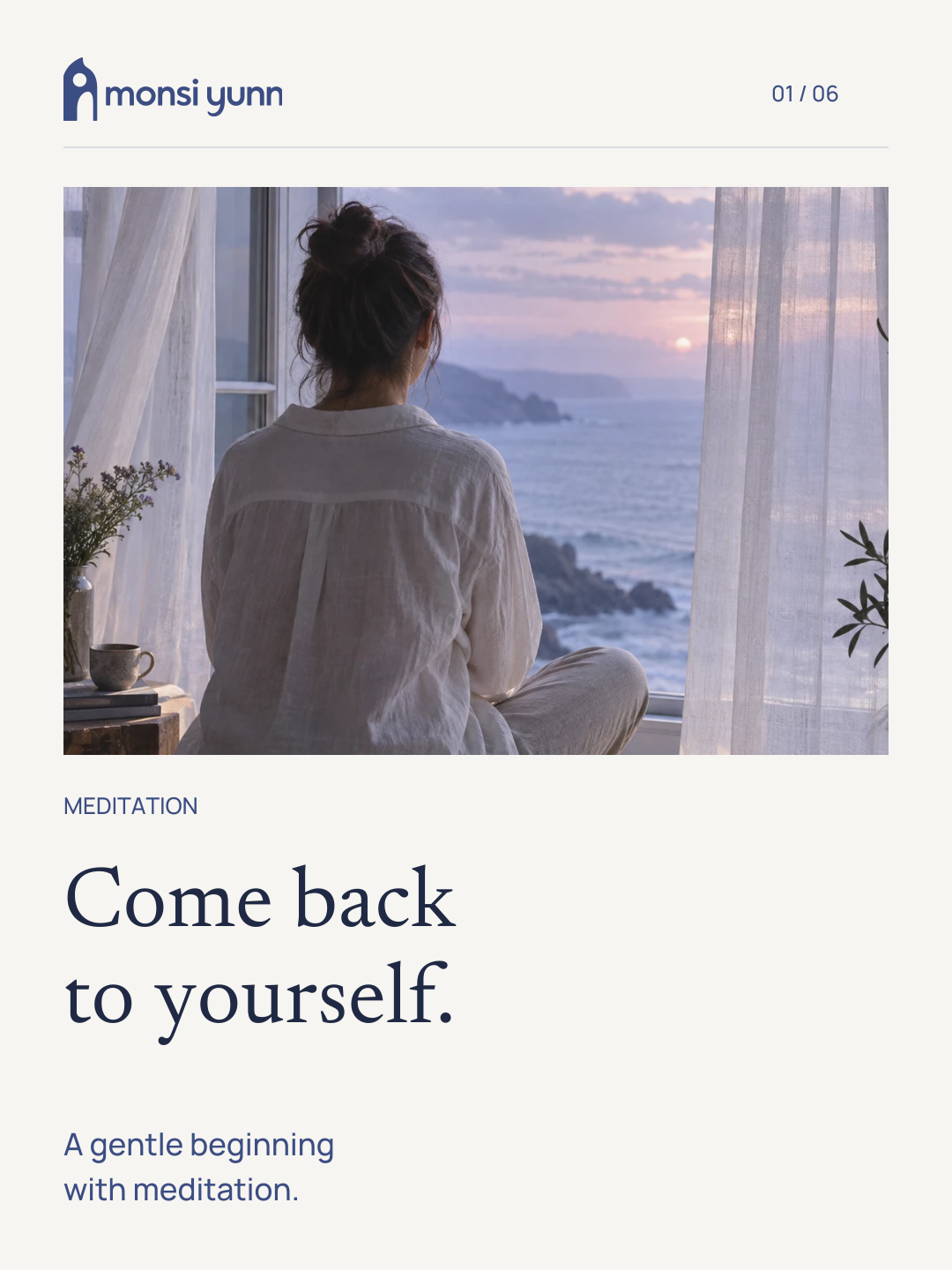

You sit down for a quiet moment. Almost immediately, you remember a message you haven’t answered, a conversation from yesterday, and something you need to buy. The room is still. Your mind is not. If this feels familiar, you already have somewhere to begin.
Arrive as you are
It is easy to imagine meditation as something you will do once life becomes a little calmer. After the busy week. When you have a beautiful corner. When you can sit without fidgeting. But the person who is distracted, restless or unsure is also welcome to sit down.
Choose a place where you can be reasonably comfortable. A chair is enough. Your feet can rest on the floor and your hands can settle wherever they naturally fall. Keep your eyes open, soften your gaze, or close them if that feels comfortable.
You do not need to manufacture a sacred atmosphere. If lighting a candle or placing a meaningful object nearby helps you mark the moment, you can. The practice can also happen with nothing more than your body, a little time, and the room you are already in.
Give your attention a place to rest
Let your attention meet something simple. You might notice the feeling of your feet touching the floor, the weight of your hands, or the sounds reaching you from outside. If breathing feels like a comfortable focus, notice a breath as it comes and goes. Allow it to keep its own rhythm.
Stay close to what you can actually feel. A small movement beneath your hand. The support of the chair. A sound that arrives and fades. There is no special sensation you need to find.
I like to think of an anchor as somewhere to return, the way a familiar window helps you recognise your own home. You can look away. You can become absorbed in something else. The place to return is still there.
The place to return is still there.
When the mind wanders, meet it kindly
At some point, you will find yourself elsewhere. Planning the afternoon. Replaying an awkward moment. Wondering whether you are doing this correctly. When you notice, pause before judging what happened.
You can quietly name it: thinking, planning, remembering. Then bring your attention back to the contact of your feet, the sounds in the room, or another comfortable anchor. The return can be small. It does not need to feel dramatic to count.
Imagine how you would speak to a friend who was learning something unfamiliar. A gentle “come back” is usually more inviting than a scolding. Bring that tone into the moment. Meditation can become a place to practise the kind of relationship you want to have with yourself.
Try a few minutes, without making a performance of it
If a short timer helps, begin with three minutes. Spend the first part settling into your seat and noticing where you are. Let the next part be a simple rhythm of noticing, wandering and returning. Toward the end, widen your attention to the room around you.
There is no need to grade the session. Some days may feel spacious. Some may feel like patiently gathering scattered thoughts. A session can be uneventful and still belong in your life.
If sitting quietly feels uncomfortable or overwhelming, open your eyes, move, or stop. You might prefer a slow walk or an ordinary task done with attention. Keep the practice responsive to your experience. You are allowed to find a gentler way in.
Let the pause reach into your day
Before getting up, ask a small question: “How would I like to meet the next thing?” Perhaps with patience. Perhaps with honesty. Perhaps by doing only one thing at a time for the next few minutes.
Then let the answer become concrete. Put the phone down during breakfast. Read the message once more before replying. Notice the water while you wash your hands. These moments can carry the same quality of returning as a formal session.
You do not have to make every activity mindful. An inner life needs space to breathe, and ordinary life also includes distraction, laughter, rush and mess. Choose one small doorway back to yourself and use it when it helps.
Begin again, without the debt
If you miss a day, there is no backlog of calm to catch up on. You can begin with the next available moment. If your old routine stops fitting, change the time, the place or the length.
It may help to connect the pause to something already present in your day: after opening the curtains, before beginning work, or when you put away your journal. Keep the invitation simple enough that it feels welcoming.
Tonight, try asking, “Was there a moment today when I came back to myself?” It might have lasted only a breath. Notice it with kindness. There is your beginning.
An optional three-minute pause
3:00
Notice a comfortable anchor. Return gently. Stop whenever you need.

With curiosity,
Monsi Yunn